
EduHiPC 2023 Technical Program
Thursday, December 18, 2023
PDF version of the technical program
Welcome and Introduction
Sushil Prasad, Ashish Kuvelkar and Sharad Sinha
Keynote 1
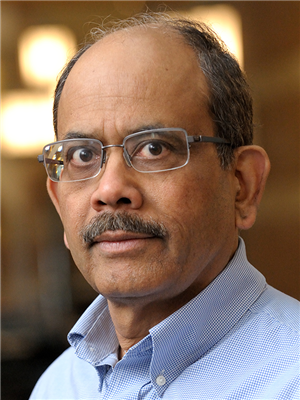
Prof. Laxmikant (Sanjay) Kale, University of Illinois at Urbana-Champaign
Introduction by Ashish Kuvelkar
Abstract: Parallel programming is a discipline within computer science, but its utility is felt in physical sciences and engineering. Simulations running on parallel supercomputers and clusters are used for deepening humanity’s understanding of the universe via computational science and help us design better artifacts via computational engineering. My own work has involved interdisciplinary collaborations. For example, the NAMD code is used for simulations of biomolecules including recent coronavirus simulations. Another program named ChaNGa is used for cosmological simulations involving regular matter, dark matter and dark energy, interacting via gravity and gas dynamics. I will describe these and other applications and my experience in collaborative research that resulted in them. More importantly, I will describe how these applications are useful for creating interest and even passion among students about parallel programming. I will also describe how elementary parallel programming exercises can be constructed in the context of such science/engineering applications.
Speaker Bio: Prof. Kale has been working on various aspects of parallel computing, with a focus on enhancing performance and productivity via adaptive runtime systems, and with the belief that only interdisciplinary research involving multiple CSE and other applications can bring back well-honed abstractions into Computer Science that will have a long-term impact on the state-of-art.
His collaborations include the widely used Gordon-Bell award winning (SC 2002) biomolecular simulation program NAMD, and other collaborations on computational cosmology, quantum chemistry, rocket simulation, space-time meshes, and other unstructured mesh applications. He takes pride in his group’s success in distributing and supporting software embodying his research ideas, including Charm++, Adaptive MPI and Charm4Py. He and his team won the HPC Challenge award at Supercomputing 2011, for their entry based on Charm++. Prof. Kale is a fellow of the ACM and IEEE, and a winner of the 2012 IEEE Sidney Fernbach award.
Paper Session I
Session Chair: Sharad Sinha
ToUCH Virtual Faculty Development Workshops: Going Beyond a Webinar,
David Bunde and Apan Qasem
Traditional and AI Tools for Teaching Concurrency,
Prasun Dewan
Neelima Bayyapu
NSF/IEEE TCPP Curriculum activities
Prof. Sushil Prasad
Keynote 2
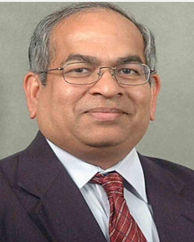
Prof. Dhabaleshwar K. (DK) Panda, The Ohio State University
Introduction by Sheikh Ghafoor
Abstract: The fields of AI (including Machine Learning (ML) and Deep Learning (DL) and Data Science are rapidly evolving. The effective development and usage of many models and the associated inference schemes depend on a good understanding of the underlying HPC hardware and software technologies. Thus, it is becoming a challenge for students and professionals to have a holistic understanding of this new field. In this context, I will share experiences from the following three initiatives in which I am engaged with: 1) A semester long course on `High-Performance Deep/Machine Learning’ for combined undergraduate and graduate students at the Ohio State University; 2) A two series 14-week course (developed through an NSF funding) on ‘AI Bootcamp for Cyberinfrastructure Professionals’ (Basic and Advanced) working in many different HPC centers; and 3) A Half-day/full-day conference tutorial on “Principles and Practice of High-Performance Deep/Machine Learning”. An overview of these courses/tutorials and the associated hands-on exercises will be presented.
Speaker Bio: DK Panda is a Professor and University Distinguished Scholar of Computer Science and Engineering at the Ohio State University. He is serving as the Director of the ICICLE NSF-AI Institute (https://icicle.ai). He has published over 500 papers. The MVAPICH2 MPI libraries, designed and developed by his research group (http://mvapich.cse.ohio-state.edu), are currently being used by more than 3,300organizations worldwide (in 90 countries). More than 1.74 million downloads of this software have taken place from the project’s site. This software is empowering many clusters in the TOP500 list. High-performance and scalable solutions for Deep Learning frameworks and Machine Learning applications from his group are available from https://hidl.cse.ohio-state.edu.Similarly, scalable and high-performance solutions for Big Data and Data science frameworks are available from https://hibd.cse.ohio-state.edu. Prof. Panda is an IEEE Fellow and recipient of the 2022 IEEE Charles Babbage Award. More details about Prof. Panda are available at http://www.cse.ohio-state.edu/~panda.
Paper Session 2
Session Chair: Neelima Bayyapu
P2RUTOR: A Programming Tutor for Parallel Programming,
Deepak Hegde, Preeti Malakar and Amey Karkare
Lecture-less Java-Threads Training in an Hour?,
Prasun Dewan
Revisiting Performance Evaluation in the Age of Uncertainty,
Pedro Bruel, Vyom Mittal, Dejan Milojicic, Michalis Faloutsos and Eitan Frachtenberg
Invited Talk
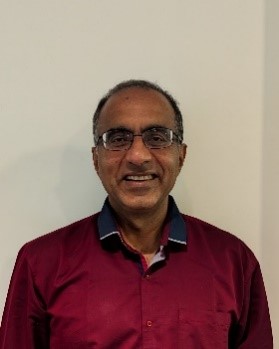
Rama Govindaraju, Google
Introduction by Sharad Sinha
Abstract: In this talk we will have an informal discussion on the trajectory of High Performance Computing and its intersection/divergence from the emerging AI/ML landscape; We will discuss similarities and differences and the trajectory of this landscape going forward. We will focus on what skills are needed for this changing landscape and how to project forward and adapt education, coursework, and projects that will prepare the next generation of students with the right set of skills for the future.
Speaker Bio: Rama is a Director of Engineering at Google where he leads the Systems Infrastructure Architecture team. Prior to that Rama was a Distinguished Engineer at IBM responsible for leading the Software Architecture at IBM’s Supercomputing Lab where he led the development of 5 generations of Supercomputers. Prior to that Rama received his MS and Phd in Computer Science from Rensselaer Polytechnic Institute in New York and BE in Computer Science from BIT Mesra, Ranchi, India.
Closing Remarks
Sushil Prasad, Ashish Kuvelkar and Sharad Sinha